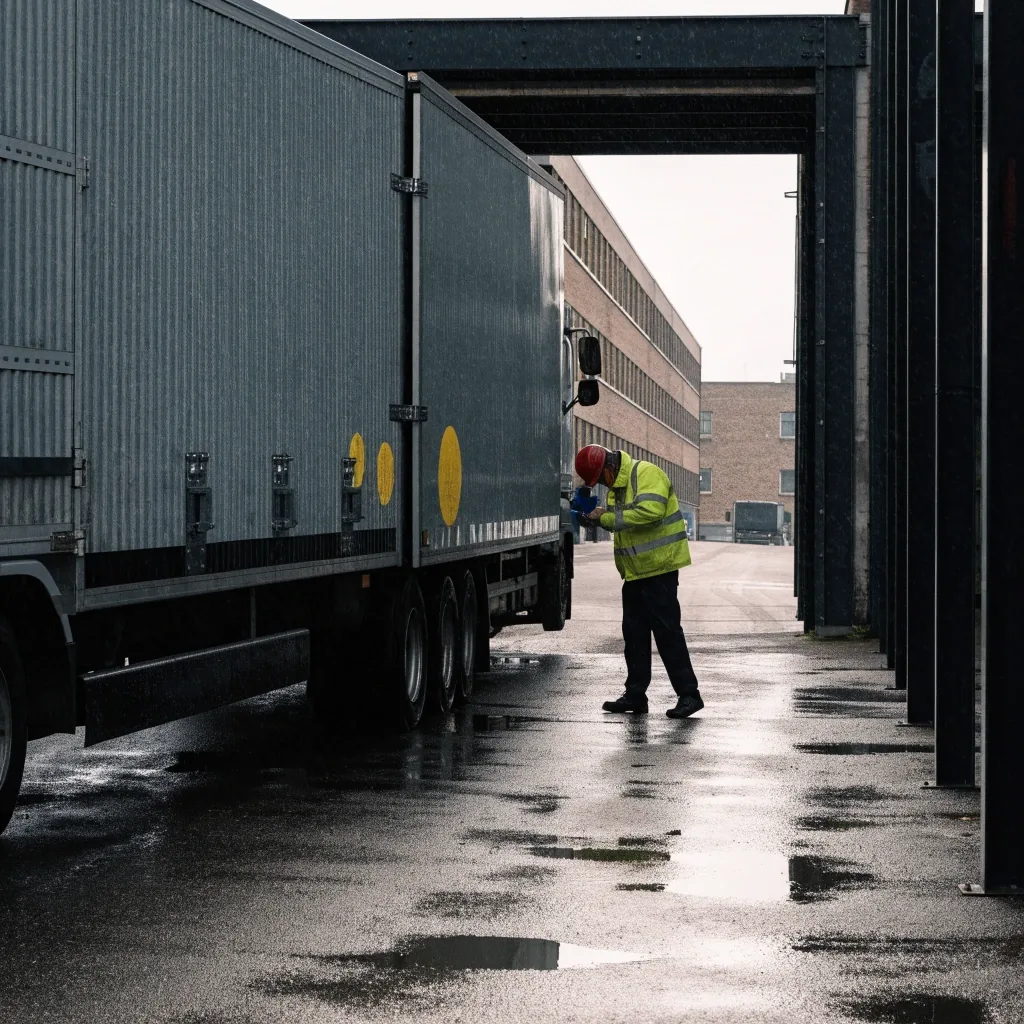
Customs, Documentation & Compliance
Customs, Documentation and Cross-Border Compliance
A correct document set keeps a trailer rolling. A missing code or a wrong value can hold it at the border for a day.
Documents that travel with the load
Where freight gets held
Customs is where international road freight is won or lost
A correct document set keeps a trailer rolling. A missing commodity code or a wrong value can hold it at the border for a day, and the cost of that day lands on the shipper, not on the border post. This page explains how we handle the paperwork side of movements in and out of Belgium: what each document does, who prepares it, and what we need from you before the trailer is loaded.
None of it is exotic. Most delays trace back to three things: an inaccurate description of goods, a commodity code that does not match the actual product, or a preferential claim made without the documents to support it. Fix those before collection and the border becomes a formality rather than a risk.
CMR documentation
What the CMR consignment note does
The CMR note is the standard contract of carriage for international road freight under the convention most European countries apply. It records the parties, the goods, the place and date of taking over, and the delivery point. Signed copies also serve as evidence in disputes about damage or delay, which is why the description of goods on it needs to match reality.
It is not a customs document, and it is not a substitute for a commercial invoice. We see the two confused often. The CMR governs the carriage relationship between sender and carrier; the invoice governs the sale. Customs asks for the invoice, the packing list and the entry, and it will ask again at destination if the paperwork does not line up.
- 01Parties: consignor, consignee and carrier named in full
- 02Goods: description, packaging, number of packages, weight
- 03Journey: place and date of taking over, delivery point
- 04Signature: both sides, at collection and at delivery
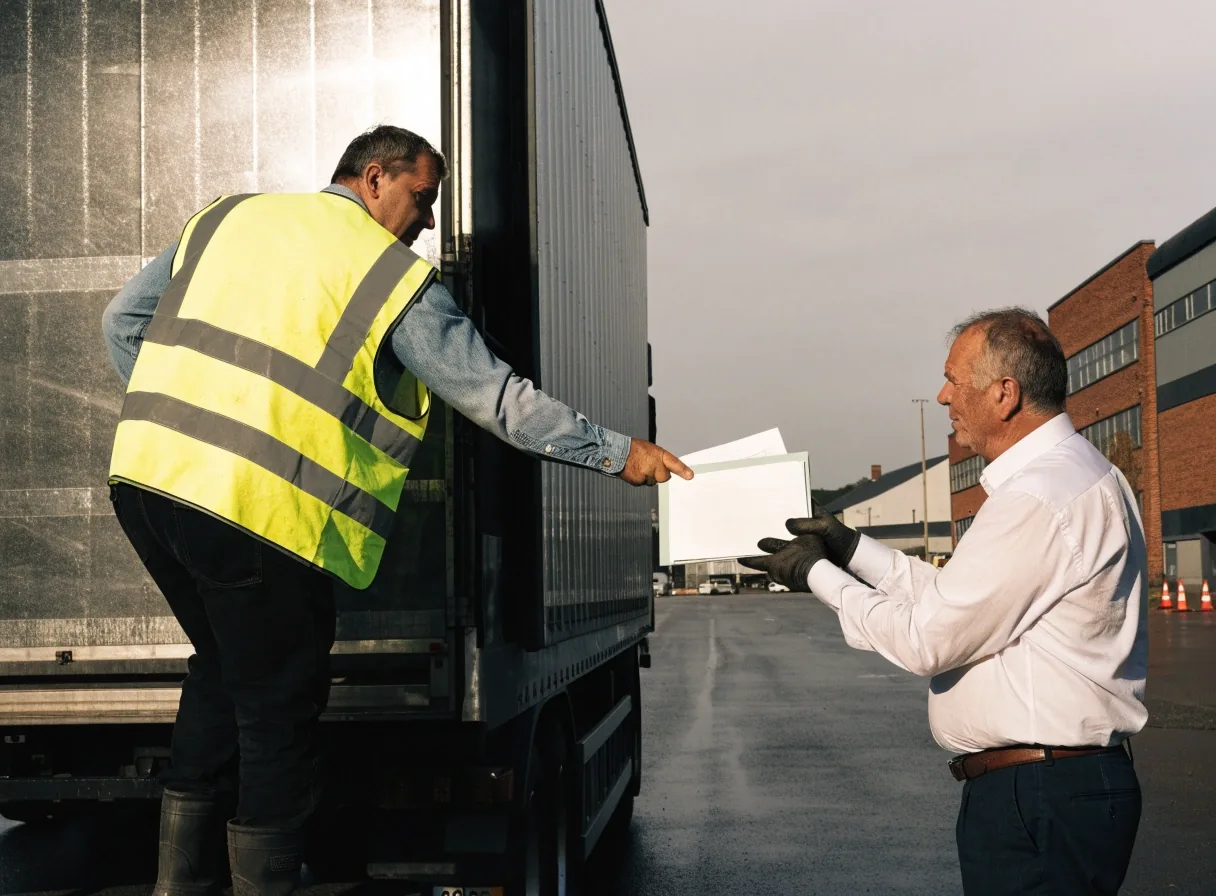
Transit declarations, export and import entries
Three separate paperwork tracks run alongside the same trailer. Which one applies depends on where the goods are going and whether they stay inside the EU customs territory.
Transit
T1 movements and the guarantee
Goods moving under customs transit, typically on a T1 declaration, travel with a guarantee that duties will be paid if the consignment does not reach its destination. The declaration has to be opened at the office of departure and discharged at the office of destination, within a set time limit.
If the discharge does not happen, the guarantee stays open and the parties get letters. We coordinate with customs agents so that transit documents are opened and closed correctly at both ends.
Export
Leaving the EU customs territory
An export entry is required for goods leaving the EU customs territory. It depends on accurate commodity codes, values, weights and origin. Getting the code wrong can change the duty rate, trigger a post-clearance audit, or cause the goods to be held.
For Belgian exporters, the export entry also feeds into VAT reporting, so errors have a domestic consequence beyond the border itself.
Import
Arriving from outside the EU
An import entry is required for goods entering the EU customs territory. The same four inputs decide the outcome: commodity code, customs value, weight, and origin. Duty rate and any anti-dumping or licensing treatment follow from those.
Where the goods continue inland to a Belgian delivery point, the release has to clear before the trailer leaves the border area. We plan the timing so the load is not held waiting on a document that could have been prepared the day before.
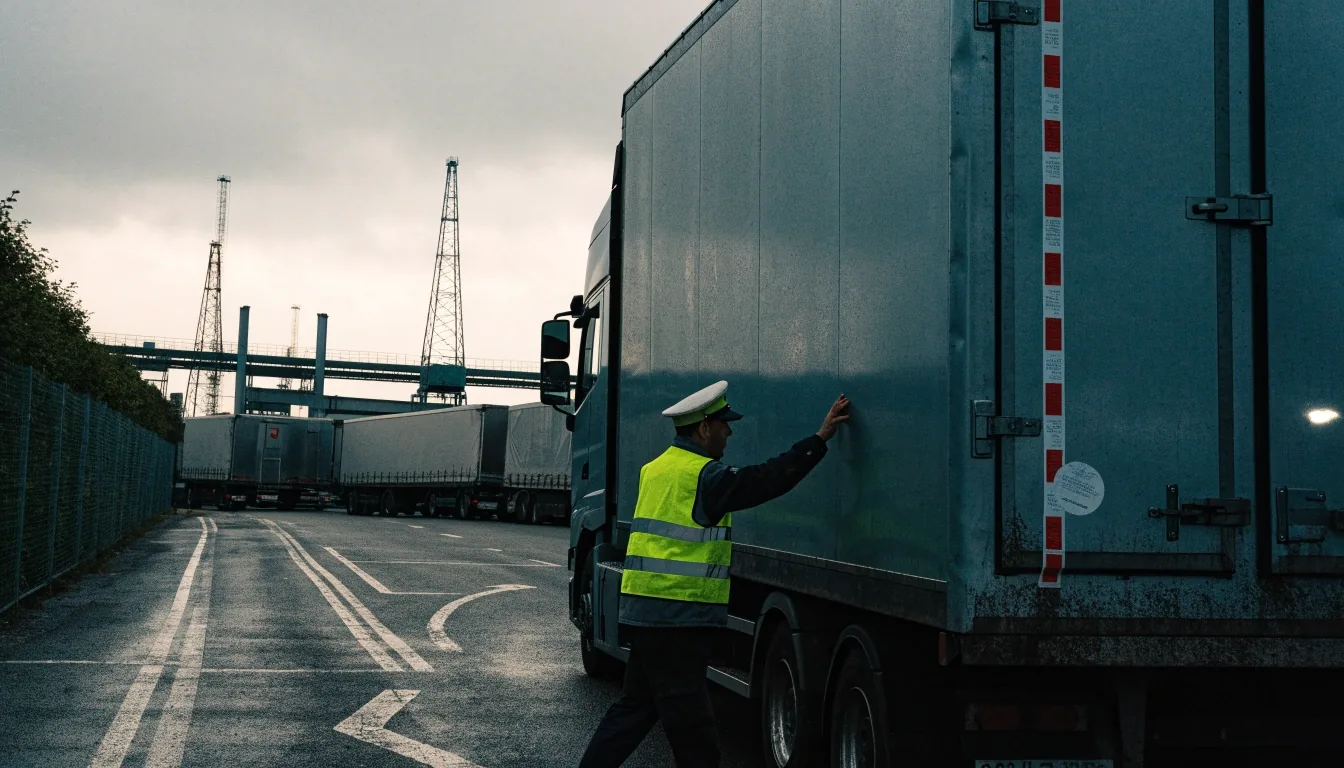
Channel crossings
UK and post-Brexit formalities on every Channel movement
Since the UK left the EU customs union, every movement across the Channel carries a customs requirement in both directions. That means export entries on the Belgian side, import entries on the UK side, and often safety and security declarations on top of the customs entry itself.
Correct commodity codes and accurate values are the two things that most often cause delays. When a code is challenged at the UK border, the load waits while the entry is amended, and no amount of driving time recovers those hours. Shippers who prepare this information before the trailer is loaded see transit times close to what they were before the change.
Belgian side
Export entry lodged before the trailer reaches the port
UK side
Import entry raised against the same commodity codes and values
On top
Safety and security declarations where the flow requires them
Origin documents and bonded movements
Two further tracks appear depending on what the buyer needs and where the duty sits. Both depend on documents prepared before collection, not after.
Certificates of origin
Preference follows the rules, not the dispatch point
Some buyers require a certificate of origin, and some goods qualify for preferential tariff treatment under a trade agreement, evidenced by an origin declaration or a EUR.1 movement certificate. Preferential treatment depends on the goods meeting specific rules of origin, not simply on where they were dispatched from.
If your customer is asking for preferential rates, tell us at booking stage so the documents are prepared before collection rather than after. A preference claim raised at the border without the underlying evidence is one of the more expensive paperwork mistakes, because the duty becomes payable on the spot.
Bonded transport
Duty deferred until the goods enter free circulation
Bonded arrangements let goods move or be stored without duties being paid until they enter free circulation. Bonded warehousing is used by importers who want to defer duty, re-export, or split a consignment across several customers.
For road freight, bonded transport means the movement itself sits under customs control, with the accompanying documents matching the authorisation. We work with bonded facilities through partners where a client's flow requires it, and we say plainly when a flow is better served outside a bonded arrangement.
Booking stage
Tell us the goods, the destination and whether preference or a certificate will be requested.
Before collection
Codes, values, weights and origin confirmed, so the entries can be lodged ahead of the load.
In transit
Transit declarations opened and discharged at both ends; guarantees closed on time.
Controlled goods
Sanctions, restrictions and controlled goods
Certain destinations, goods and end-uses are subject to EU sanctions or export control rules. These apply to the shipper and the carrier alike, and they are not optional.
Dual-use items, military goods and some technology categories need licences before they move. We ask about the nature of the goods at enquiry stage, because a shipment that cannot legally be carried is a problem better discovered before loading than at a border post.
Keeping records straight
One file per movement, kept for the full audit window
Transport and customs documents generally need to be retained for several years, and audits can reach back through that window. Digital copies stored by shipment reference make a request from an auditor or a customer a matter of minutes rather than a search through boxes.
It also helps when a buyer disputes a delivery date or a consignee claims damage. Our practice is to keep the full file for each movement under one reference: CMR note, entries, transit declarations, proof of delivery, and any certificate issued along the way.
- CMR consignment note and signed proof of delivery
- Export and import entries with the codes as lodged
- Transit declarations and their discharge
- Origin, preference and certificate documents where issued
What we need from you before loading
Send these with the booking enquiry and the paperwork side of the movement is largely decided. Where something is not yet known, say so rather than guessing; an amended entry before departure is far cheaper than one after.
Common questions
Paperwork questions we get at booking
If your question is not here, contact dispatch and we will answer it for the specific movement.
Can you clear the goods if we have never exported outside the EU before?
Yes. We work with customs agents on both ends, so the first export entry is prepared the same way as a routine one. What we need from you is the goods description, the commodity code if you have one, the commercial value and the origin. If you are unsure of the code, tell us the product and we will flag what to confirm with your supplier before the entry is lodged.
What happens if a transit declaration is not discharged?
The guarantee stays open and the parties named on the declaration receive letters asking for the movement to be closed. This usually means proof of arrival at the office of destination was not lodged within the time limit. We track the open transit references on each shipment and follow up with the agents at both ends so the discharge happens inside the window rather than after a letter arrives.
Can the CMR note replace a commercial invoice?
No. The CMR is the contract of carriage between sender and carrier; the invoice is the commercial document that customs uses for value. Both travel with the load, and both have to agree on the description and the number of packages. When they disagree, customs follows the invoice and the discrepancy becomes a question for the shipper.
How long do we need to keep the documents after delivery?
Transport and customs documents generally need to be retained for several years, and audits can reach back through that window. The exact period depends on the document and on the rules that apply to the goods. We keep the full file for each movement under one reference, so a request from an auditor, a customer or an insurer can be answered from a single place instead of a search through boxes.
Next step
Send the goods details and we will map the paperwork
Customs support, documentation and cross-border compliance are handled as part of the movement, not as a separate service bolted on afterwards. Contact dispatch with the goods, the destination and the timing, and we will tell you which entries, transit declarations and certificates the shipment needs before the trailer is loaded.
NORDICWAY TRANSPORT SOLUTIONS BV
- Registered office
- Raveschoot 22, 9080 Lochristi, Belgium
- Company registration
- 1095715859
- Management
- De Wilde Lindsay and De Groote Ellen
- Dispatch line
- 953482109
- [email protected]
- Working hours
- Monday to Friday, 09:00–18:00