NORDICWAY
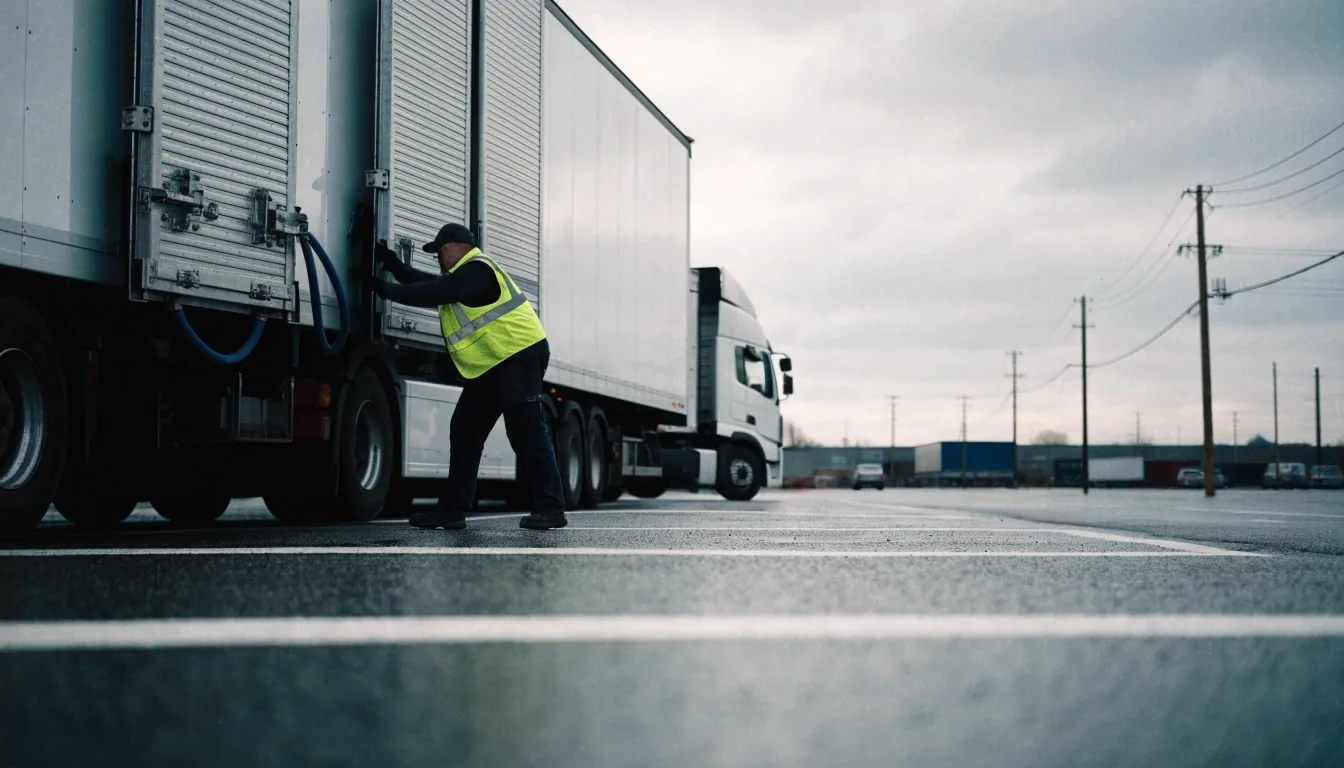
Container terminal in overcast haze with a gantry crane dark against the sky and a tractor unit waiting on the quay

Lochristi · Belgium · Road freight across Europe

Road Freight Services We Arrange

Full truck load, part load, groupage, container transport, cross-trade and the customs paperwork that travels with every one of them.

Full truck load one trailer, one consignment
Part load a share of the unit
Groupage fixed lane departures
Container transport terminal to consignee

Tell us the cargo, the lane and the deadline — we will say which service fits.

How to read this page

Which service fits your shipment

The service you need depends less on the cargo than on how much trailer space it takes and how fast it has to arrive. A single pallet to Germany and a full production run to Spain are different jobs with different rates and different planning. Below is how we split the work: full truck load, part load, groupage, container transport, cross-trade and the customs support that runs alongside all of them.

Read the rows in order if you are new to road freight, or jump straight to the service that sounds like your consignment. Each row ends with what we need from you at booking, so you can see before you call whether the job sits inside our lane network.

The services, row by row

Every line below is a service we arrange and quote directly. Rates move with lane density, fuel and season, so the numbers come per enquiry rather than off a price list.

01

Full truck load

A dedicated trailer for one shipment, loaded at one point and delivered to another. Direct routing, no consolidation, no co-loading with other shippers' pallets. It suits exporters with regular production volumes, high-value goods, or cargo that cannot tolerate the extra handling of a shared vehicle. You choose the trailer type, and the vehicle stays with your load from pick-up to proof of delivery.

Book with

Collection address, delivery address, loading window, trailer type (curtainsider, box, mega, tautliner).
02

Part load

Part load covers consignments that take a significant share of a trailer but not the whole unit, typically somewhere between six and twenty pallets depending on dimensions. It is often the most economical middle option on long-haul European lanes. The planning is closer to a full load than to groupage, but the rate reflects the space you actually occupy. If your volumes fluctuate week to week, this is usually the flexible choice.

Book with

Pallet count, dimensions, weight, and whether the load can be stacked.

03

Groupage

Groupage puts several shippers' consignments on one trailer along a fixed lane. You pay for loading metres, which makes it the sensible option for one or two pallets going to Germany or France. Transit is slightly longer because the vehicle collects and distributes along the route. Departures are scheduled rather than on demand, so a groupage booking works best when your deadline has a day or two of tolerance built in.

Book with

Loading metres or pallet count, pickup postcode, delivery postcode, required arrival date.

04

Container transport

We move 20ft and 40ft containers between Antwerp-Bruges terminals, depots, inland hubs and consignees, including the Ghent area. This work is less about driving and more about timing: terminal appointments, release references, demurrage and detention clocks all run whether or not the truck is on site. We plan pick-ups around those windows so that storage charges do not quietly accumulate on your invoice. Both dry and, through partners, temperature-controlled containers are covered.

Book with

Container number, terminal, release reference, delivery window, and container size.

05

Cross-trade movements

Cross-trade is freight moving between two countries where Belgium is neither origin nor destination. A German manufacturer shipping to Spain, or a Dutch trader supplying Italy, can both be handled without the goods touching a Belgian dock. These jobs require familiarity with two sets of national rules and, often, two languages of documentation. They are quoted case by case, because lane density varies enormously.

Book with

Origin country, destination country, commodity, and which documentation language is required.

06

Urgent and dedicated pick-ups

Sometimes a line stops and a part has to move today. Urgent pick-ups are arranged outside the normal lane schedule, using the nearest available vehicle or a dedicated run. These movements cost more, because they displace planned work, and we will say so upfront rather than burying it. Where a genuine emergency exists, speed of decision matters more than the rate difference, so we quote fast and confirm fast.

Book with

Pickup address, latest delivery time, cargo description, and a contact reachable on the day.

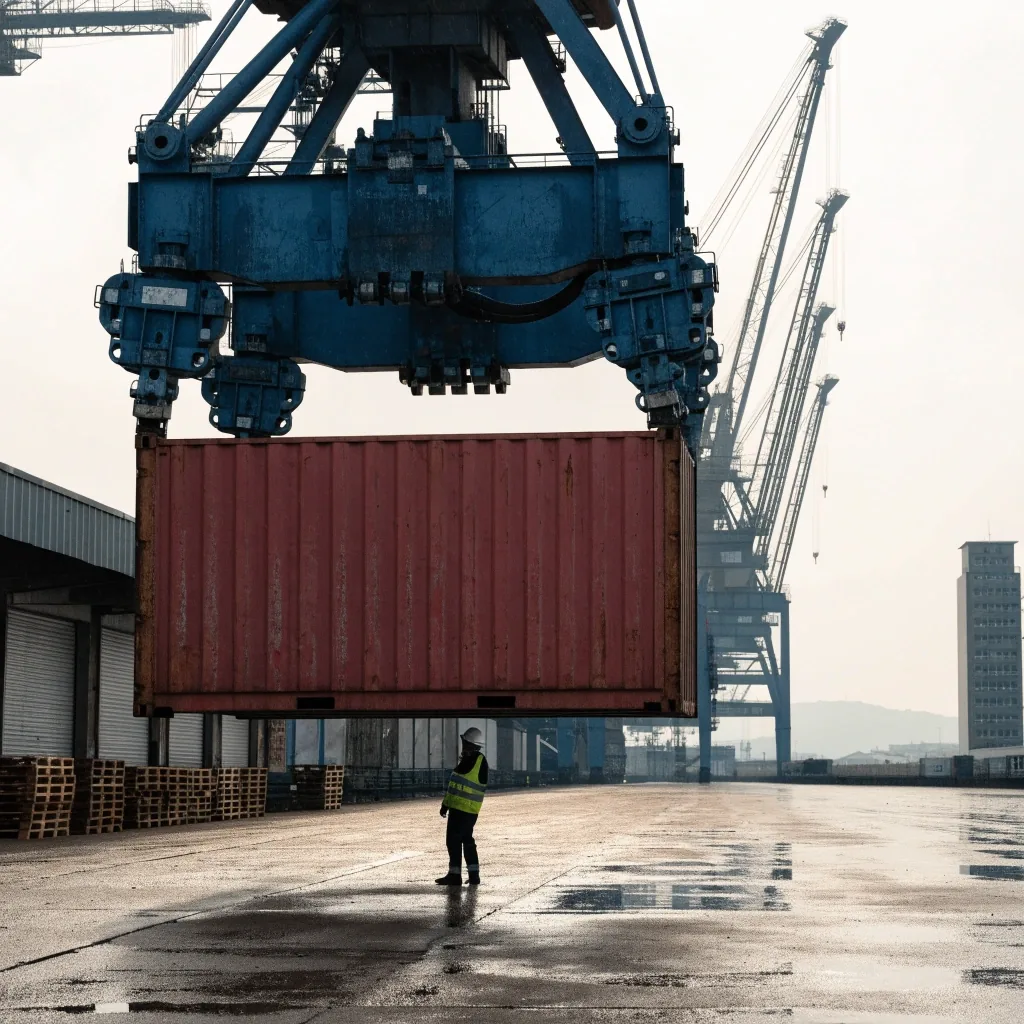
Shipping container mid-lift at a port terminal with a dock worker in high-vis standing clear below

Terminal to consignee

The clock at the terminal does not stop

Container trucking lives or dies on appointment windows. Free time at the terminal is measured in hours, and once it runs out the charges are billed to whoever holds the container. We build the plan backwards from the release reference: which terminal, which gate, which appointment slot, how long the lift takes, and how far the consignee is from the quay.

If a container is going to sit, we would rather know at booking than discover it when the demurrage invoice arrives. Tell us the release date and the earliest the consignee can accept, and we will slot the pick-up around both.

Container sizes

20ft and 40ft, dry or temperature-controlled through partners.

Terminals served

Antwerp-Bruges terminals, depots, inland hubs and the Ghent area.

What runs the cost

Terminal appointments, release references and demurrage or detention time.

Customs and documentation support

Every international movement carries paperwork, and the paperwork decides whether the truck waits at the border or rolls through. We prepare CMR consignment notes, coordinate T1 transit declarations, and work with customs agents on import and export entries. Certificates of origin, EUR.1 forms and packing lists are collected at booking stage where the buyer requires them. For non-EU traffic, commodity codes and values must be correct before dispatch, not corrected afterwards.

If your consignee has a broker, we work with them. If not, we can explain what each document does and who has to sign it.

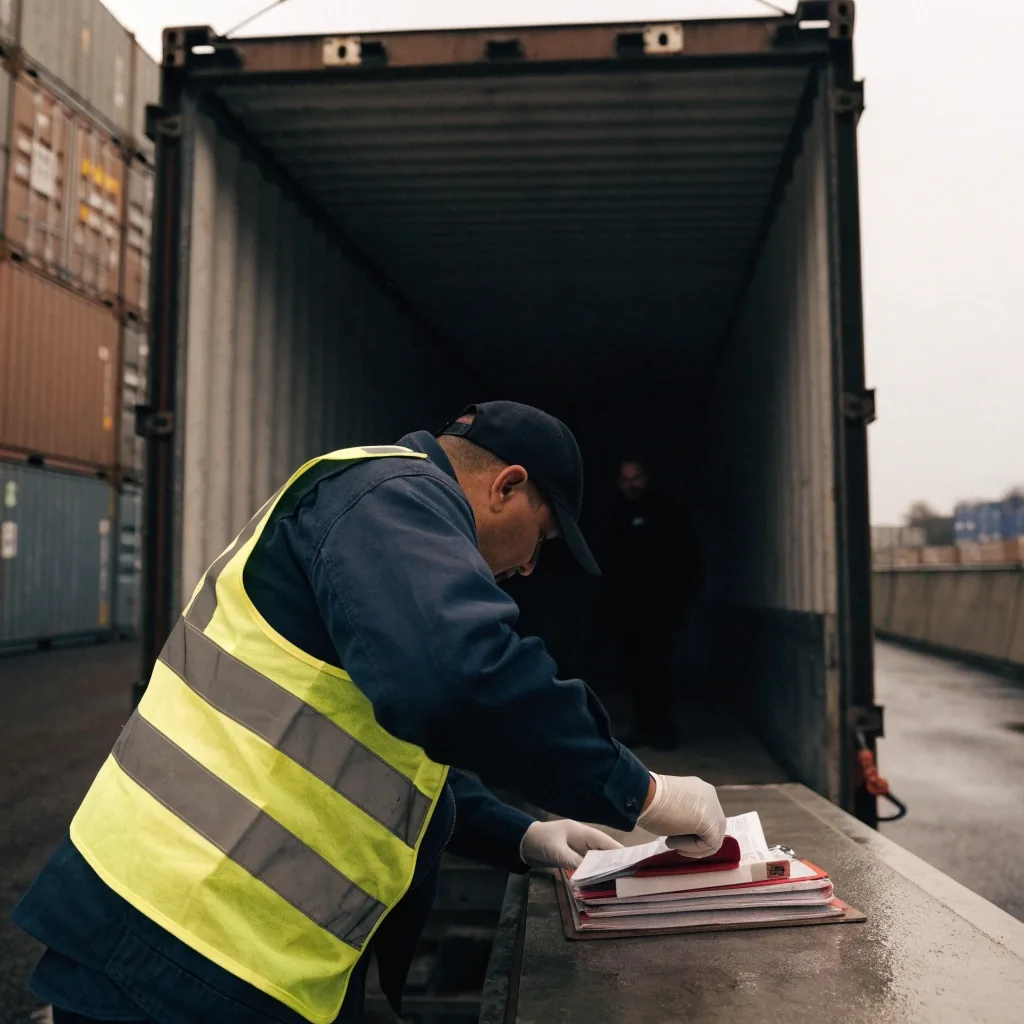
Dispatcher's hands sorting blank consignment documents on a metal desk in a logistics office

Consignment notes

The CMR travels with the load

We complete the CMR consignment note for each international movement and make sure the sender, carrier and consignee fields match what the driver is actually carrying. A note that disagrees with the load is the fastest way to lose an hour at a border post.

Transit and entries

T1 declarations, import and export

For goods moving under transit, we coordinate T1 declarations with the customs agent handling the entry. Import and export entries are raised against the commodity code and value you supply, which is why those two fields are worth checking before the truck is loaded.

Origin and preference

Certificates of origin and EUR.1

Where a buyer needs proof of preferential origin, certificates of origin and EUR.1 forms are collected at booking stage rather than the morning of collection. Packing lists go with the same bundle, so the consignee's broker has everything in one place.

Questions shippers ask before booking

How do I know whether my consignment is groupage or part load?

It comes down to space and deadline. One or two pallets on a lane we already run, with a day of tolerance, fits groupage and you pay for loading metres. Six to twenty pallets on a long European lane usually prices better as part load, because the vehicle is planned around your consignment rather than collecting along the route.

Can you collect from a terminal without a release reference?

No. The terminal will not release the box at the gate without the release reference, and the appointment slot is booked against that reference. What we can do is hold the appointment while the reference is being issued, so the truck is ready the moment it clears.

Who is responsible for the commodity code on a non-EU shipment?

The exporter or importer holds the legal responsibility for classifying the goods and stating the value. We raise the entry against what you supply and flag anything that looks inconsistent with the packing list, but we cannot classify a product on your behalf.

Do you handle cross-trade jobs where Belgium is not involved?

Yes. A German manufacturer shipping to Spain or a Dutch trader supplying Italy can be moved without the goods touching a Belgian dock. These lanes are quoted case by case because density varies so much between corridors, and we will tell you when a route is thin enough that timing becomes uncertain.

What is outside your service range?

We are a road freight and logistics operator, not a parcel network, and we do not run a next-day courier service for envelopes or single cartons. We also do not operate our own warehouse in every country; where bonded or short-term storage is needed, we arrange it through established partners. Being clear about the edges of our service saves everyone a wasted phone call. If your requirement sits outside these lines, we will tell you and, where we can, point you to someone who fits.

Next step

Tell us the lane and we will tell you the service

Send the origin, destination, cargo and the date you need it delivered. If the job sits outside our lanes or outside road freight altogether, we will say so on the first reply rather than after a quote.

Registered operator

NORDICWAY TRANSPORT SOLUTIONS BV

Company registration number 1095715859. Management: De Wilde Lindsay and De Groote Ellen.

Where we work from

Raveschoot 22, 9080 Lochristi, Belgium

Monday to Friday, 09:00–18:00