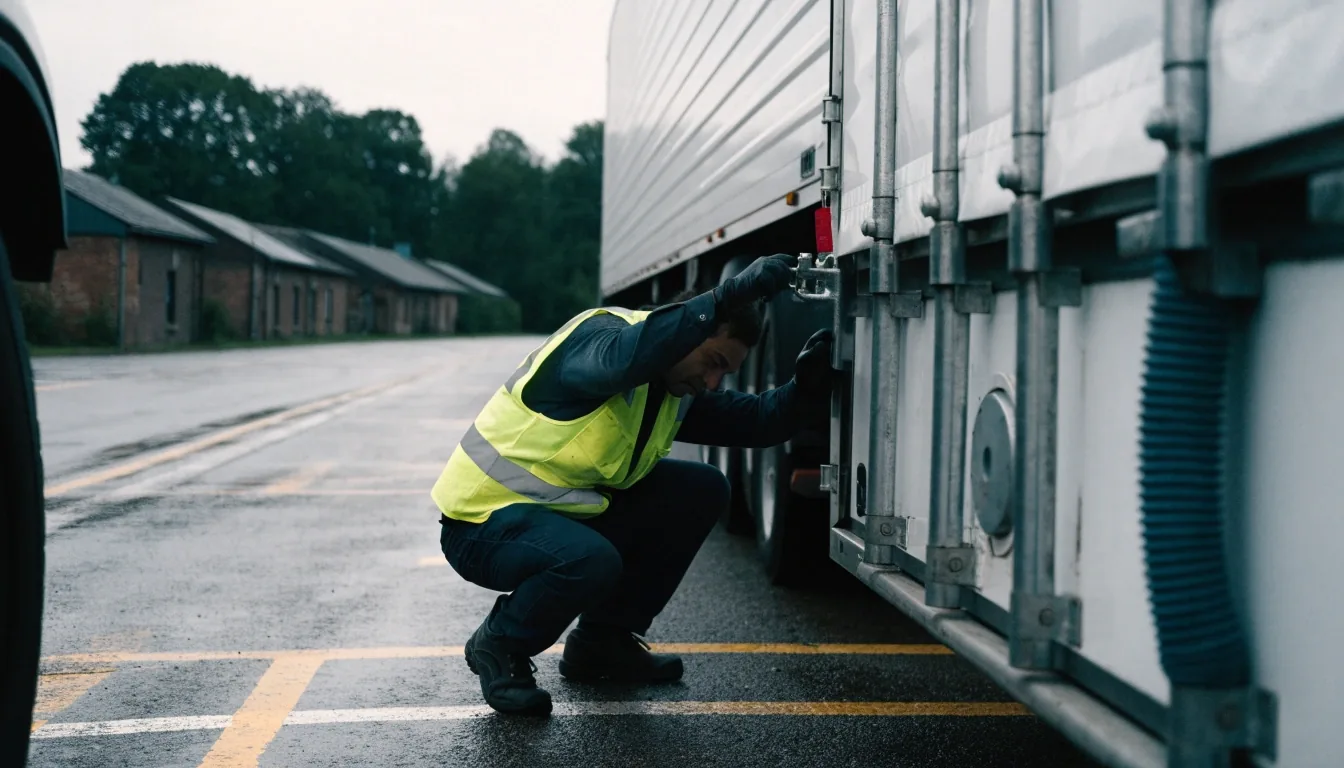
Trailer selection desk
Fleet and Equipment for European Haulage
The trailer decides whether a shipment arrives intact as much as the driver does. Here is the equipment we plan with, what each type suits, and the limits that matter when you are booking.
Equipment on the road this week
Curtainsider · 13.6 m · side and rear loading
Palletised and stackable freight on Benelux and French lanes, usually placeable at short notice.
Box trailer · rear loading only
Weather-protected and secure cargo where an open curtain is not the right answer.
Skeletal chassis · 20 ft and 40 ft ISO
Port and terminal work around Antwerp-Bruges and the inland hubs near Ghent.
Reefer and controlled atmosphere · on request
Arranged with partners, so temperature range and duration should come with the enquiry.
What we plan with
Every load type we quote comes with a named trailer
Road freight fleet choices are not interchangeable. A curtainsider and a box trailer carry the same tonnage and behave nothing alike at a dock, and a container chassis answers a question neither of them can. Below are the trailer types we work with, the cargo each one suits, and the limits to check before you confirm a booking. When you send an enquiry, tell us the trailer type you have in mind — or describe the cargo and we will name one.
Curtainsiders
Side and rear loadingThe workhorse of European road freight. A curtainsider allows side loading with a forklift as well as rear loading, which speeds up docks that are not designed for nose-in access. Standard internal height suits palletised goods up to around 2.4 metres, with load capacity typically in the region of 24 tonnes depending on the unit. If your pallets are wrapped and stackable, this is almost always the right trailer.
Box trailers
Rear loading onlyEnclosed on all sides, with a solid roof and locking rear doors. Box trailers suit goods that need weather protection, security in transit, or protection from road spray on long runs. They are also the usual choice for high-value cargo where an open curtain is a risk. Loading is rear-only, so your dock needs to accommodate that. Internal strapping points are available for loads that must not shift.
Container chassis
20 ft and 40 ft ISOFor 20ft and 40ft ISO containers, we plan skeletal chassis that lock directly onto the box. This is the standard equipment for port and terminal work around Antwerp-Bruges and the inland hubs near Ghent. Container weight limits matter: a 40ft box at maximum gross weight can exceed what a standard chassis and tractor unit may legally carry on Belgian roads. We check the verified gross mass before dispatch, not after.
Refrigerated and temperature-controlled
Partner-operatedTemperature-sensitive freight is covered through refrigerated trailers and, where needed, controlled-atmosphere units arranged with partners. These are used for food, flowers and pharmaceutical traffic, and they require temperature set-points and pre-cooling instructions at booking. We do not operate a large reefer fleet ourselves, so lead time matters. Give us the required temperature range and duration, and we will confirm availability before you commit.
Flatbeds, low-loaders and abnormal loads
Case by caseFor machinery, construction equipment and out-of-gauge items, flatbed and low-loader equipment is arranged case by case. Abnormal loads need permits, and sometimes escort vehicles, depending on dimensions and the countries crossed. Permit lead times vary by country and can run to several days, so early notice is essential. If a load exceeds standard dimensions, tell us at enquiry stage rather than at the loading dock.
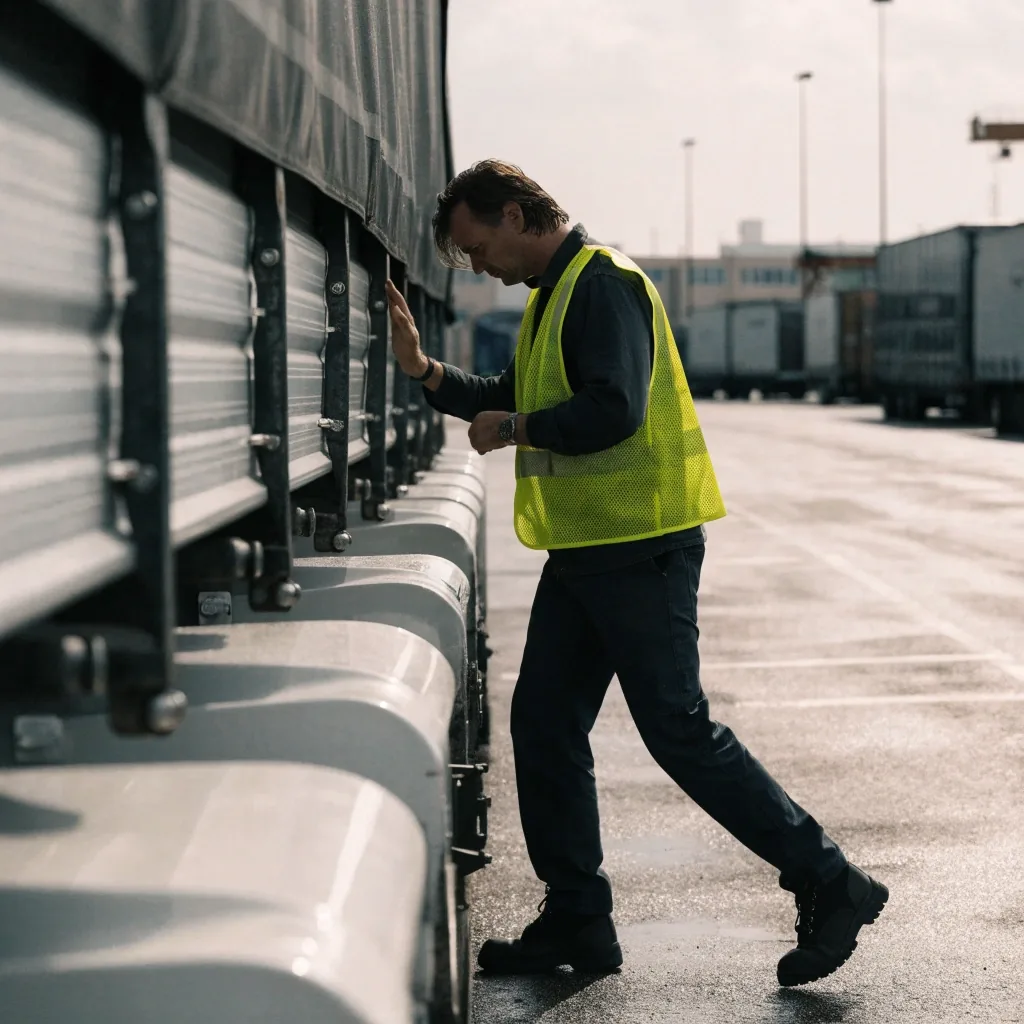
Equipment register
What sits behind the booking
A short register of the equipment and the operating facts that decide whether your load fits, in the order we check them at enquiry stage.
- Standard internal height
- Around 2.4 m for palletised goods on a curtainsider
- Load capacity
- Typically around 24 tonnes, unit dependent
- Gross combination limit
- 44 tonnes for certain operations, 40 tonnes common internationally
- Container work
- Skeletal chassis for 20 ft and 40 ft ISO boxes
- Temperature freight
- Reefer and controlled-atmosphere units through partners
- Abnormal loads
- Flatbed and low-loader arranged per job, permits included
Capacity, weight limits and the checks before dispatch
Payload is arithmetic before it is logistics. Three things decide how much your shipment can legally weigh on the day, and all three are settled before the vehicle leaves Lochristi.
Combination limits
What the road allows
A standard articulated unit in Belgium operates within a 44-tonne gross combination limit for certain transport operations, with the common European norm at 40 tonnes for general international haulage. Which figure applies depends on the operation, not on preference.
Real payload
What your cargo can weigh
Actual payload depends on trailer tare weight, fuel and equipment fitted. Two curtainsiders from different build years can differ by a few hundred kilos of usable capacity. We calculate payload before dispatch so the vehicle arrives legally loaded.
If it is wrong
Why we check early
Overloading carries fines and forces unloading at the roadside, which delays everything downstream — the delivery, the next collection, and the vehicle behind it. A five-minute check at booking is cheaper than an hour on a hard shoulder.
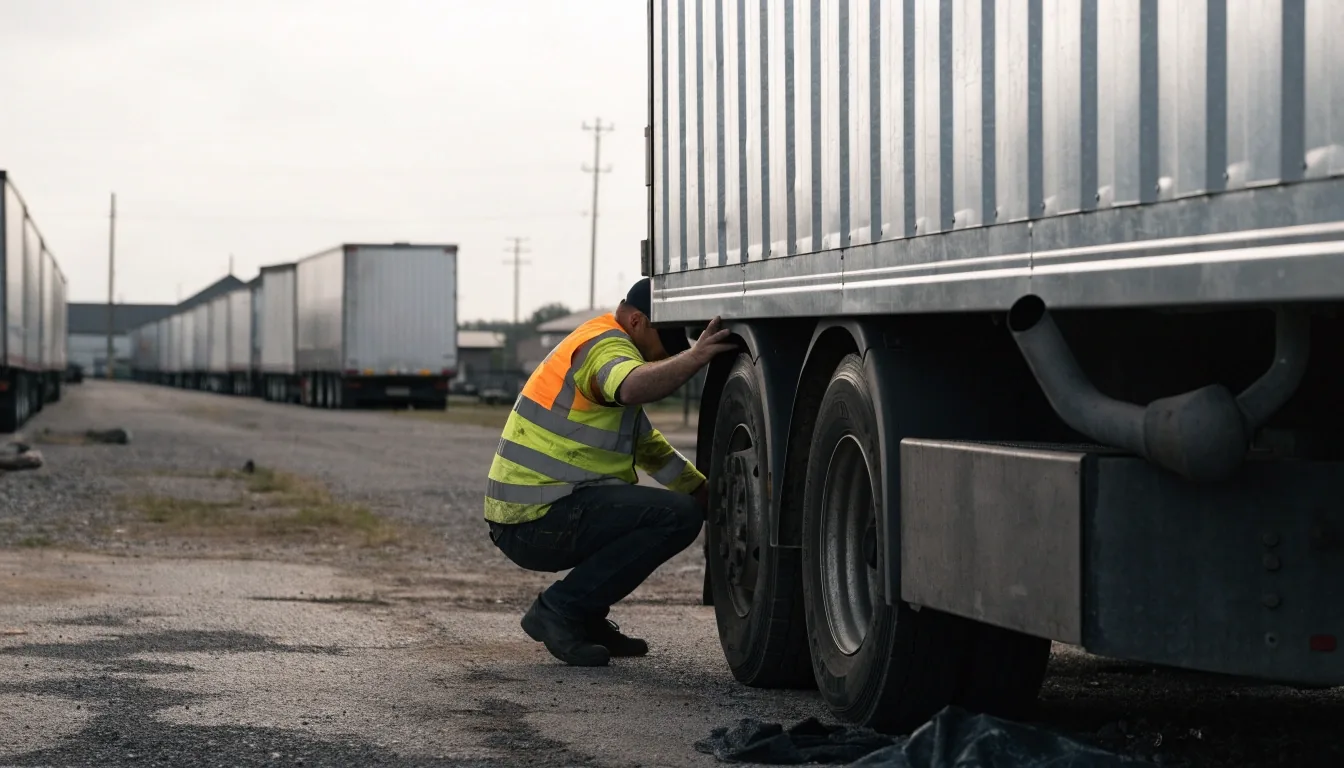
Maintenance and roadworthiness
Checked before every departure, not only at inspection
Trailers and tractor units in international service are subject to periodic technical inspection, and Belgian operators work to the same EU roadworthiness framework as their neighbours. Tyres, brakes, load security and lighting are checked before each departure. A defect found at the dock costs minutes; the same defect found at a border checkpoint costs a day. Equipment age and condition also affect insurance and customer audits, so we keep units current.
On every pre-departure check
- Tyres and tread depthall axles
- Brakes and air linestrailer and unit
- Load security and strappingmatched to cargo
- Lighting and reflective markersfront, side, rear
- Trailer body and curtain conditionweather tight
Availability and lead time
How much notice your trailer type needs
Standard curtainsiders can often be placed at short notice on core Benelux and French lanes. Specialised equipment, reefers, container chassis during peak port periods, and abnormal-load units need more notice. If your shipment requires a specific trailer type, mention it in the enquiry rather than assuming it is standard. That single detail determines whether we can confirm the job today or need two days to source the right unit.
Not sure which trailer your cargo needs?
Tell us the dimensions, weight and destination. We will name the trailer type, the capacity available on that lane, and any permit or pre-cooling step that has to happen before loading. Dispatch answers between 09:00 and 18:00, Monday to Friday.
Questions we get at booking
The answers below cover the details that most often change a quote or a loading plan. If yours is not here, the dispatch desk will answer it directly.
Can you confirm a trailer type before I commit to the booking?
Yes. Tell us the trailer type or describe the cargo and we will confirm what is available on your lane before the job is fixed. For reefers and abnormal loads that confirmation may take a day or two because the unit is sourced through partners.
My pallets are 2.6 metres high. Does a curtainsider still work?
Standard internal height suits palletised goods up to around 2.4 metres, so taller stacks need a different unit or a repack. Send the loaded pallet height at enquiry stage rather than at the dock, and we will check what is available on that lane.
How do you handle a 40ft container that is close to maximum gross weight?
We check the verified gross mass before dispatch, not after, and we compare it against what the chassis and tractor unit may legally carry on Belgian roads. If the box is over, we discuss the options with you before the vehicle is sent to the terminal.
What do you need from me for a refrigerated shipment?
The required temperature range, the expected journey duration, and any pre-cooling instruction for the cargo. Because we arrange these units with partners rather than operating a large reefer fleet ourselves, the earlier we have those three details, the more likely we can confirm your date.
Is a box trailer more secure than a curtainsider?
It is enclosed on all sides with locking rear doors, which is why it is the usual choice for high-value cargo where an open curtain is a risk. The trade-off is loading: box trailers are rear-only, so your dock has to accommodate that access.
How early do abnormal-load permits need to be requested?
Permit lead times vary by country and can run to several days, and some crossings also need escort vehicles depending on dimensions. If a load exceeds standard dimensions, tell us at enquiry stage rather than at the loading dock so the paperwork can start in parallel with the planning.
Operating company
NORDICWAY TRANSPORT SOLUTIONS BV
- Registration number
- 1095715859
- Management
- De Wilde Lindsay and De Groote Ellen
- Address
- Raveschoot 22, 9080 Lochristi, Belgium
- Dispatch hours
- Monday to Friday, 09:00–18:00
Fleet enquiries
Equipment questions are handled by the dispatch desk in Lochristi. Call 953482109 or write to [email protected] with your trailer type, loading point and delivery point, and we will come back with what is available.
Ask about equipment availability